From Foster Care to Forgiveness: Ryan Stream’s Journey of Healing
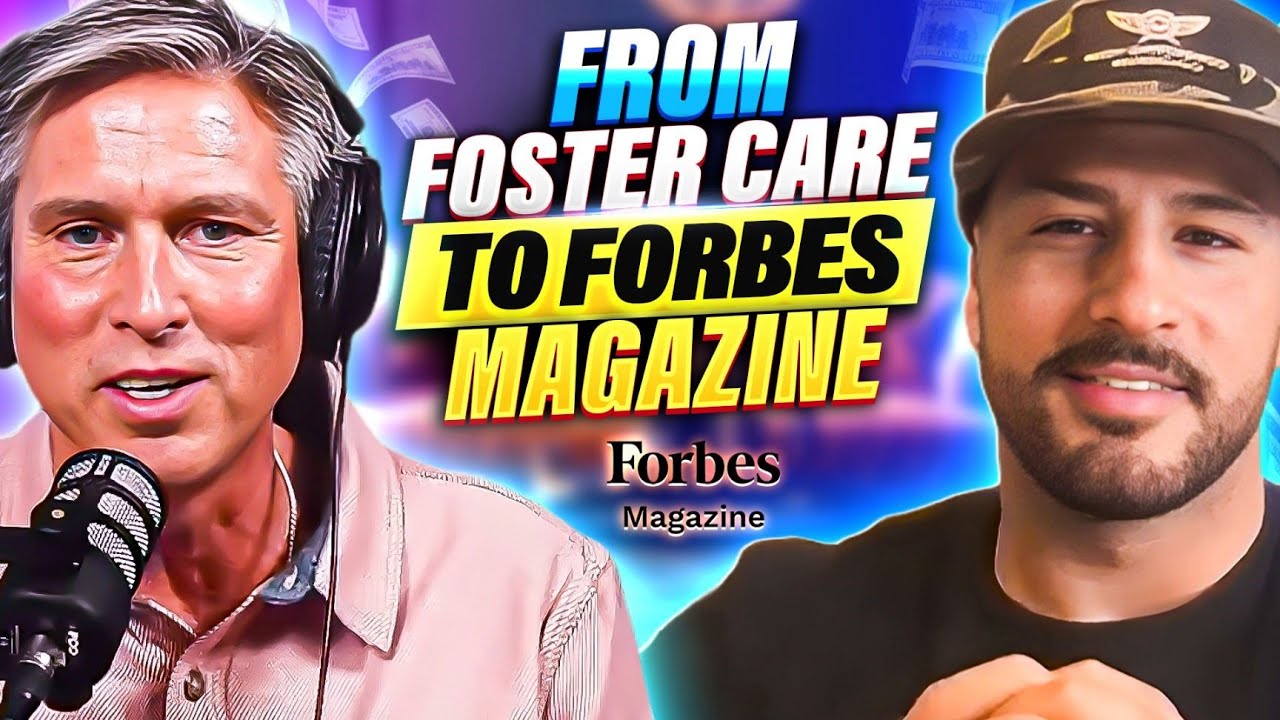
Ryan Stream’s Journey of Healing shares a first-hand addiction recovery story and practical lessons for people navigating legal pressure, incarceration, or reentry.
Key Takeaways
- Ryan Stream’s Journey of Healing explains what triggered the legal and personal crisis.
- The episode shows how accountability and structure shape outcomes in addiction recovery.
- Listeners get practical second-chance lessons they can apply immediately.
From Foster Care to Forgiveness: Ryan Stream’s Journey of Healing
When Ryan Stream told me about forgiving his parents, I knew I was about to hear something that would change how I think about resilience forever.
I’ve been following Ryan’s journey from afar for a while now – this guy literally went from foster care homes to Forbes Magazine, and his story embodies everything the Nightmare Success podcast stands for. But sitting down with him for this conversation, I realized I was only scratching the surface.
Ryan’s a two-time military veteran, award-winning motivational speaker, and honestly, a guy who can do just about everything. Piano blindfolded? Check. Rapping under helicopters? Check. But behind all those talents is a story of survival that started in the darkest places imaginable.
From Homeless Shelters to Homecoming King
Ryan’s childhood reads like something out of a movie – and not the feel-good kind. His mother was dealt the most terrible cards you can imagine: raped twice by age 12, both parents dead by 12. When she took her own life during Ryan’s ninth grade year, he and his brothers were separated through the foster care system.
“My mom was still the most terrible cards, taken advantage by men when you’re a child, both parents die at the age of 12,” Ryan told me. “How could I blame my mom for anything? My mom hugged me, my mom loved me. My mom was there the best she could.”
What strikes me about Ryan is how he turned what could have been a victim’s story into something else entirely. Even as a kid dealing with learning disabilities, getting pulled out of class for extra reading help, and being the shortest guy around at 5’4”, he found ways to fight back. When kids tried to rap and make fun of him, he’d walk right up to them and start rapping himself until the whole school was laughing at them instead.
But success in high school – homecoming king, honor graduate, breaking track records – doesn’t protect you from making the wrong choices.
The Snowball Effect That Nearly Killed Him
By 17, Ryan was hanging with the wrong crowd. By 19, he was sued twice, $30,000 in debt, homeless in his car, and had sold on a police officer. His best friend got addicted to drugs and died. Ryan found himself waking up in drug houses with children around.
“It was hard my best friend. I got addicted to drug. He’s dead now. You know, so there’s so much in my life,” Ryan shared, his voice heavy with the weight of those memories.
The breaking point came when he was sitting in his car with a plan to end his life. But instead of following through, he made a choice that saved him: he went to eight different courts, begging judges to let him deploy to Afghanistan instead of serving jail time. One judge – his adopted father was also a judge – looked past Ryan’s rap sheet and saw potential.
“He walked off the stand and he hugged me and he said you’re going to learn more in Afghanistan than you’re going to learn here,” Ryan recalled.
The Gift of an Egg in a War Zone
Afghanistan taught Ryan about humanity at both its worst and its best. His unit was ambushed on their very first night – one of the biggest ambushes in Afghanistan at FOB Salerno. Of the 32 soldiers he served with, 23 were blown up, and one was killed.
But it was a moment with two Afghan children that changed everything for Ryan. After initially yelling at a hungry brother and sister who approached their vehicle, Ryan’s sergeant convinced him to throw them some candy. The older brother grabbed it first, then turned and gave that piece of candy to his little sister.
Hours later, the boy returned alone. As he approached their vehicle, the soldiers prepared for the worst – children had been used as suicide bombers. Ryan even turned on his camera to document what they thought would be a tragic ending.
But what the boy had behind his back wasn’t a bomb. It was an egg.
“The third best gift I’ve ever been given was an egg and it was from that little boy and he taught me something. No matter where you’re at in the world, there is good, wherever there is bad.”
Pack It On: The Philosophy That Changed Everything
Coming home from war brought its own battles. PTSD, disappearing for days at a time, struggling to connect with his wife and newborn child. Ryan ended up working in a coal mine, where coworkers called him an idiot and questioned how he’d ever been allowed to carry a weapon.
Rock bottom came when he got fired from that job and found himself in his car again, this time with another plan to end his life. But his wife put her hands on his shoulders and said five words that changed everything: “I believe in you. That’s why I married you.”
That’s when Ryan developed what he calls his five-step system, and more importantly, his “pack it on” philosophy. He watched his older brother get beat up four times in a fight, getting up each time until finally the other guy said “I’m done, you win.”
“Sometimes people will want to be around you, or they will want to buy something from you because of the effort that you’re putting in,” Ryan explained. “When people see that you’re resilient and you have a smile on your face, that’s the biggest key to my success.”
Today, Ryan runs four businesses with seven income streams, is nearly finished with a psychology degree despite his learning disability, and speaks to hundreds of thousands of students each year. He’s got music videos going viral, a bestselling book, and a TEDx talk coming out soon.
But ask him about his biggest success, and he doesn’t mention any of that.
“Having a family, you know what I mean? That’s success, dude. It’s not the money, it’s not the awards – success is when your children want to come home and see you.”
Key Takeaways
- Ryan Stream’s Journey of Healing explains what triggered the legal and personal crisis.
- The episode shows how accountability and structure shape outcomes in addiction recovery.
- Listeners get practical second-chance lessons they can apply immediately.


