Jeff Grant: NY Attorney to Prison to Ordained Minister
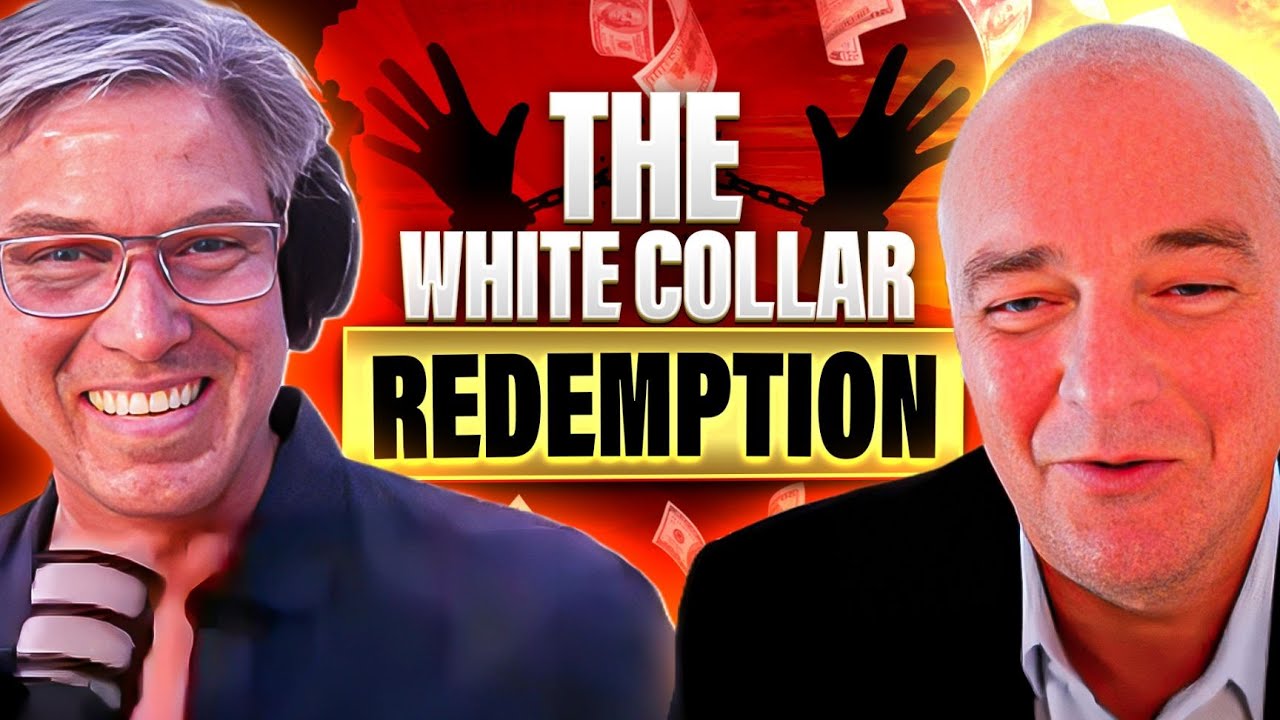
Jeff Grant shares a first-hand addiction recovery story and practical lessons for people navigating legal pressure, incarceration, or reentry.
Key Takeaways
- Jeff Grant explains what triggered the legal and personal crisis.
- The episode shows how accountability and structure shape outcomes in addiction recovery.
- Listeners get practical second-chance lessons they can apply immediately.
Jeff Grant: NY Attorney to Prison to Ordained Minister
“The thing I feared the most turned out to be the best for me.”
Jeff Grant had it all figured out. Georgetown Law grad. Real estate attorney in Manhattan with 20 employees. General counsel to major developers. Then he tore his Achilles tendon on a basketball court, and everything came undone.
I’d been wanting to interview Jeff after reading his New Yorker profile. What he’s doing now should probably be a book and a movie.
Growing Up Without Parents
Jeff grew up on the South Shore of Long Island, part of the Jewish exodus from Brooklyn in the late 50s and early 60s. His parents were part of the swinging sixties scene. They didn’t raise him. None of the parents did.
“We grew up pretty much without parents,” Jeff told me. “We were just with our friends. You leave in the morning and come home late at night.”
Without parental supervision, Jeff and his friends had to figure out their own ethics. By 13, they’d discovered their parents’ liquor cabinets. They’d ride bikes to the Dairy Barn, buy orange juice, mix screwdrivers, and get drunk on the basketball court.
“Almost anybody who grew up on Long Island relates right away,” Jeff said. “Of course, this is kind of what it was.”
The Real Estate World
Jeff partied his way through college, then went straight to law school. He’d watched “Judd for the Defense” on TV and decided he wanted to be a lawyer. After graduating, he built a thriving practice doing real estate syndication work in Manhattan.
But the drinking and drug use never stopped. It just shifted. By his late 30s, he was self-medicating undiagnosed bipolar disorder with substances. The go-go real estate lifestyle was the worst thing for his condition.
Then came the Achilles tear in 1992.
The Opioid Spiral
Jeff went to an orthopedist friend and told him he couldn’t touch him unless he wrote a script for 40 Demerol.
“I have no idea where that came from,” Jeff admitted. “The rules are suspended. Now I can do this.”
From Demerol he moved to OxyContin. He was an early victim of the opioid crisis, caught up in easy prescriptions and doctors who wrote freely. He ballooned to 285 pounds. His marriage suffered. His practice suffered.
One day he couldn’t make payroll. In a drugged haze, he instructed his office manager to borrow from the client escrow fund. That’s the nuclear button in law. The investigation started soon after.
Then 9/11 hit. Two months later, the SBA was advertising disaster loans for businesses affected by the attacks. Jeff applied, lying about having an office near Ground Zero. He got $247,000. In a manic episode, he immediately paid off his personal credit cards with the money.
Hitting Rock Bottom
Jeff resigned his law license before they could take it. That night, after his family went to sleep, he took an entire bottle of pills.
He survived. A few days later, he checked into Silver Hill rehab in Connecticut. For the first time, he was properly diagnosed with bipolar disorder and put on the right medication.
“It was the shift from a transactional way of life to a transformative way of life,” Jeff said.
Twenty Months Sober, Then the Knock
After almost two years of sobriety, going to three AA meetings a day, Jeff got a call from two federal agents. There was a warrant for his arrest related to the SBA loan.
He hired a lawyer and turned himself in at 500 Pearl Street in lower Manhattan. It was still a war zone from 9/11, with checkpoints and military everywhere.
“I really did feel like the worst person in the world,” Jeff recalled.
But he viewed it as a consequence of his behavior, an inevitable next step in his recovery. The court personnel treated him with respect. He waited two more years to be sentenced: 18 months.
Mind, Body, Spirit
Jeff went into prison with a simple philosophy: accomplish one great thing for mind, body, and spirit during his year inside.
For mind, he took 200 guitar lessons and became good enough to play in the church band after release.
For spirit, he explored religion and faith deeply.
For body, he walked the track. He did the math: 10 miles a day for a year equals roughly the distance from New York to Los Angeles. He got a road atlas from the prison library and charted his progress, learning about each town he “passed through.”
“People would join me and say, what are you doing today? I said, well, I’m in the middle of my walk from Nashville to Memphis.”
He lost 65 pounds and could run a 5K.
Finding His Calling
After release, a counselor asked what his plan was. Jeff said AA meetings and sponsor work.
“Maybe you want to do some things that you can put on a resume,” the counselor suggested.
Jeff started volunteering at his old rehab, then other nonprofits. A pastor at his church told him he should go to seminary. Jeff didn’t even know what seminary was.
Three years later, he graduated from Union Theological Seminary in Manhattan with a master’s in divinity, majoring in social ethics.
Progressive Prison Ministries
After graduating, Jeff took a job as associate pastor and director of prison ministries at an inner-city church in Bridgeport, Connecticut. He was writing a blog about the contrast between wealthy Greenwich and impoverished Bridgeport when a reporter called asking if he was “the minister to hedge funders.”
That’s when it clicked. Jeff and his wife Lynn founded Progressive Prison Ministries, the first organization in the world dedicated to serving people navigating the white-collar criminal justice system.
Getting His Law License Back
Jeff recognized a gap in the market. Criminal lawyers get clients the shortest sentence possible, but then what? There’s no one to help with bankruptcies, partnership dissolutions, divorces, all the collateral damage.
He petitioned to get his law license back. Now he combines legal expertise with lived experience to help people work around the barriers that come with a conviction.
At an American Bar Association white-collar conference in Miami, Jeff introduced himself by saying, “I’m Jeff Grant and I spent 14 months in prison for a white-collar crime.” The chairman pointed at him: “You’re the guy from The New Yorker!”
“Not one person I’ve met has been dismissive,” Jeff said. “Not one person who hasn’t treated me like a peer.”
The Three Things
Jeff’s biggest takeaways from his journey:
-
Sobriety rocks. Without getting sober, nothing good could have happened.
-
Who you marry is the most important decision of your life. Jeff couldn’t have done this without his wife Lynn. She calls him on his BS.
-
Live within your means. “The fact that I now live within my means means I can make any decision I want. I don’t have to do anything.”
Jeff runs a weekly Monday night support group for people navigating white-collar criminal justice issues. I joined a Zoom call with 700 past participants. The empathy and help in that room was unlike anything I’ve experienced.
You can reach Jeff Grant through Progressive Prison Ministries.
Key Takeaways
- Jeff Grant explains what triggered the legal and personal crisis.
- The episode shows how accountability and structure shape outcomes in addiction recovery.
- Listeners get practical second-chance lessons they can apply immediately.
Related Guides
Continue With Related Guides
How Federal Sentencing Actually Works (Step-by-Step)
A practical breakdown of the federal process from investigation through sentencing and immediate post-sentencing steps.
What First Week in Federal Prison Feels Like
What to expect during intake and early adjustment, plus practical ways to reduce avoidable first-week stress.


